
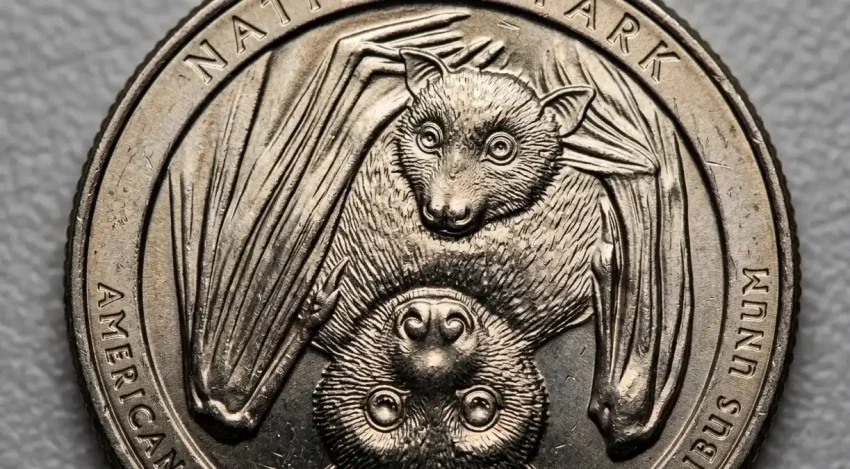
Numismatic 2020 Bat Quarter value for this specific coin remains tied to its minting location and surface quality.
Market transactions recorded between 2024 and 2026 confirm a steady price climb for elite-grade specimens.
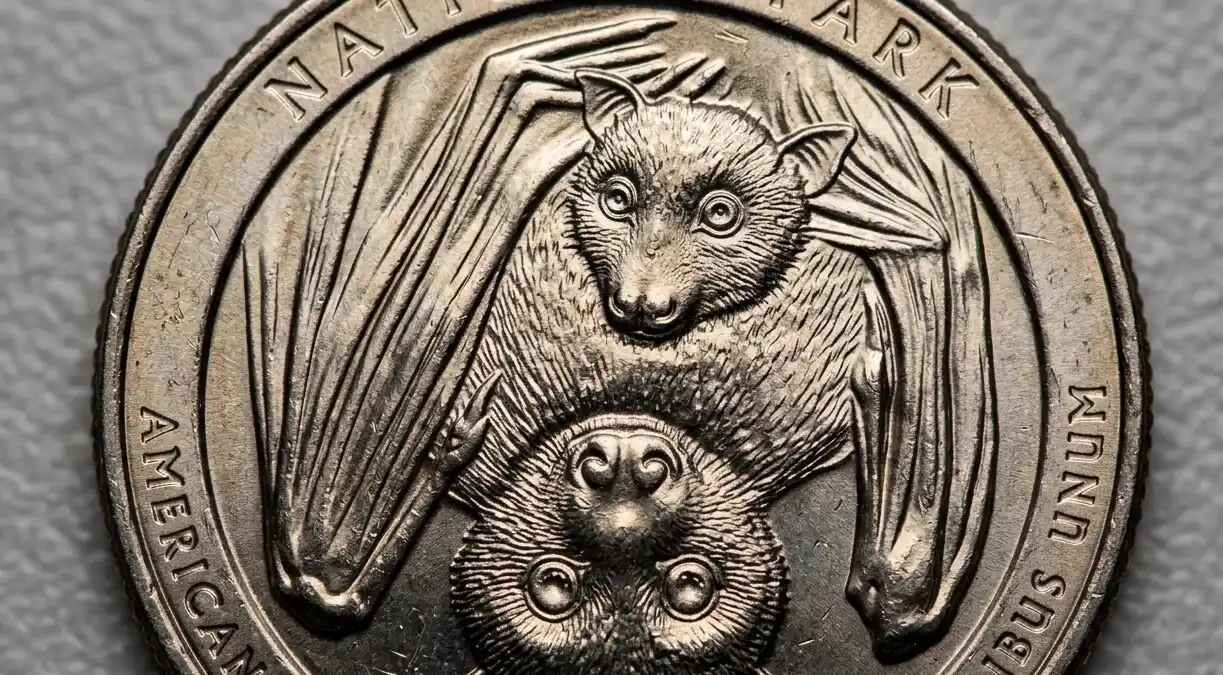
Minting Distribution and Production Data
Manufacturing in 2020 took place at four distinct facilities.
Each facility utilizes a unique letter identifier located on the obverse to the right of George Washington’s portrait.
- Philadelphia (P): 212,200,000 units
- Denver (D): 286,000,000 units
- West Point (W): 2,000,000 units
- San Francisco (S): Limited collector-only production
Total circulating supply → 500,200,000 units.
Denver’s production exceeded Philadelphia’s output by 73,800,000 pieces.
Physical Properties and Material Makeup
Maintaining strict measurement standards ensures compatibility with automated sorting systems.
These specifications apply to standard circulating versions.
| Feature | Standard Value |
| Metal Layers | Copper and Nickel outer layers, Copper core |
| Weight | 5.67 grams |
| Diameter | 24.26 millimeters |
| Thickness | 1.75 millimeters |
| Edge Pattern | Reeded (119 individual ridges) |
Weight deviations exceeding 0.15 grams necessitate immediate authenticity verification.
Market Impact of the West Point (W) Mint Mark
Adding the “W” mark transforms a common payment tool into a high-tier investment asset.
West Point Mint released exactly 2 million units directly into general circulation.
Randomly mixing these coins into standard bank bags created an immediate supply shortage.
Extreme Rarity → Significant Price Premium.
2020-W (MS65) Price Trajectory:
- 2021: $15
- 2023: $22
- 2026: $30
Circulating finds demonstrate an annual appreciation rate of 18%.
Including the V75 privy mark on 2020-W quarters further boosts collector appeal.
This mark commemorates the 75th anniversary of the end of World War II.
Verified Auction Performance (2024–2026)
Records are established during private and public auctions involving certified items.
The following data represents peak realizations in the current market cycle.
- 2020-W V75 (MS68): $1,150 (Sold January 2026).
- 2020-S Silver Proof (PR70 DCAM): $180.
- 2020-D (MS68): $420.
Market statistics show a 5% price softening for MS64 grades due to increased secondary market supply.
Specimens graded MS67 or higher show a scarcity-driven growth of 12% per year.
Distinguishing Between Metal Types
San Francisco produced quarters in two distinct metal versions for collectors.
Investment logic separates these categories based on inherent liquidity.
- Copper-Nickel (S): Low entry barrier → Priced at $10.
- 99.9% Silver (S): Tied to metal spot prices → Priced at $45.
Weight Comparison:
- Copper-Nickel Quarter → 5.67 grams.
- Silver Quarter → 6.25 grams.
Moving to pure silver instead of the older 90% alloy became the standard for these sets in 2019.
Documented Minting Errors and Varieties
Technological failures during the 2020 American Samoa production run created a niche market.
Identifying these errors requires coin finder app.
| Error Type | Visual Characteristic | 2026 Market Price |
| Double Die | Text doubling on the reverse | $75 |
| Off-center | Image missing from part of the disc | $120 |
| Die Crack | Raised line crossing the bat’s body | $15 |
The “Blind Bat” variety occurs when the die becomes clogged with grease.
Resulting coins lack a visible eye on the animal.
This specific error carries a $25 premium over the standard value.
Condition Grading Scales
The Sheldon Scale determines financial potential through a numeric value from 1 to 70.
Circulated coins rarely exceed the MS63 threshold.
- MS60–MS62: Featuring multiple contact marks from other coins.
- MS63–MS64: Showing average luster and moderate scratches.
- MS65–MS66: Presenting high quality with minimal surface distractions.
- MS67+: Exhibiting perfect luster and zero visible flaws.
Professional certification costs range from $25 to $60 per unit. But you can check the tokens for free with the free coin app.
Spending on certification is only logical for “W” marks or flawless “P” and “D” examples.
Market Availability Trends
Six years post-release, most high-quality coins have moved into private hands.
Finding a rare “W” mark in daily change has dropped to a probability of 0.0004%.
Search activity for the “Bat Quarter” remains higher than average for the America the Beautiful series.
Unique biology on the reverse side drives this sustained popularity.
Investor interest in original Mint Sets rose by 22% over the last two years.
Visual Degradation and Wear Sequence
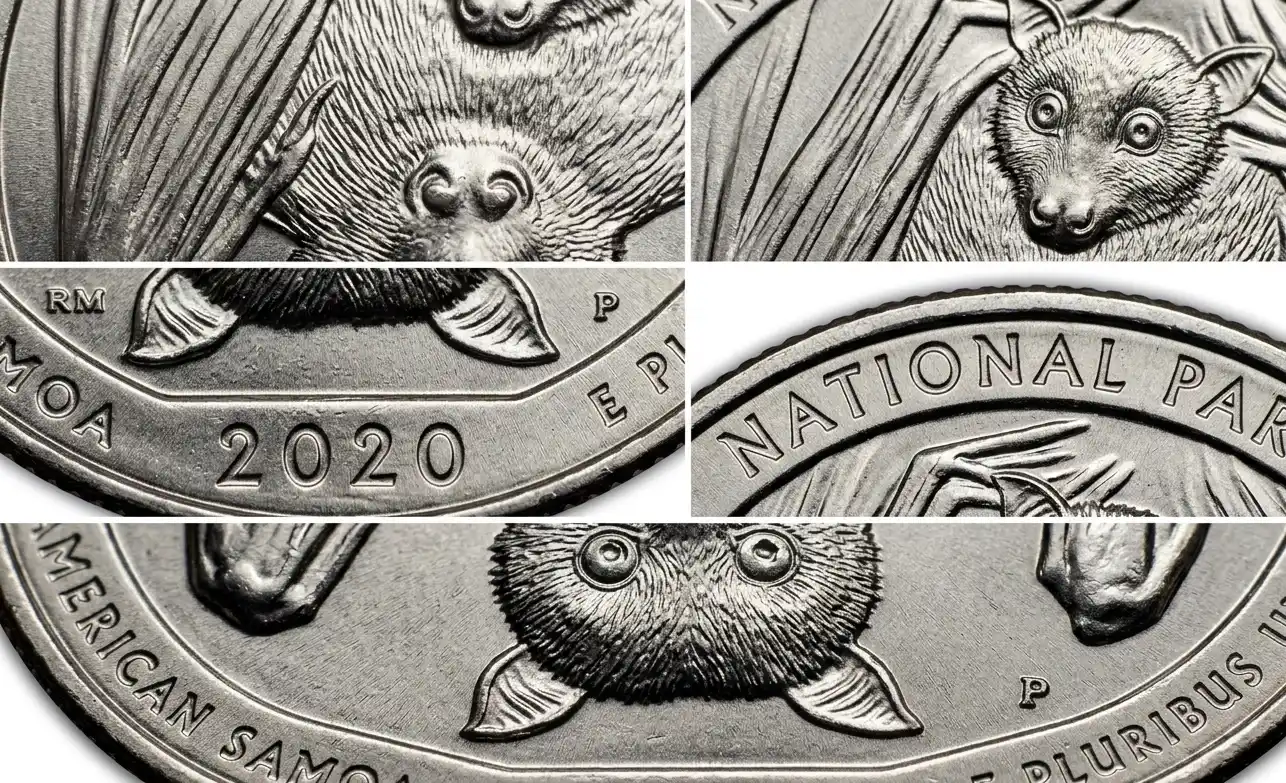
The relief of the Samoan fruit bat design features specific points prone to friction.
Assessing wear allows for rapid grade estimation.
Wear Sequence:
- Wing Texture: Small membranes disappear first.
- Eyes and Face: Facial features begin smoothing out.
- “National Park” Text: Letter edges show initial rounding.
- Body Fur: Detail flattens into a solid surface.
Very Fine (VF20) coins retain their outlines but lose 50% of internal detail.
Protection and Storage Requirements
Environmental moisture causes darkening of the copper-nickel layer.
Using plastic capsules prevents surface oxidation.
- Avoid skin contact (wear cotton gloves).
- Maintain air humidity below 45%.
- Eliminate storage in PVC-based albums.
Surface destruction due to chemical reactions typically lowers a grade by 5–10 points.
Online Auction Realization Methods
Selling 2020 quarters requires high-quality macro photography.
Buyers prioritize coins lacking small “bag marks” or hits.
Trading platform commissions in 2026 reach 13–15%.
Net profit calculation → Sale price minus commission minus shipping.
Individual sales for coins worth under $20 are often economically inefficient.